Training and Deploying TensorFlow Models at scale on Kubernetes with Kubeflow
Alvin Henrick
Principle EngineerChange HealthCare
Architecture & Tools
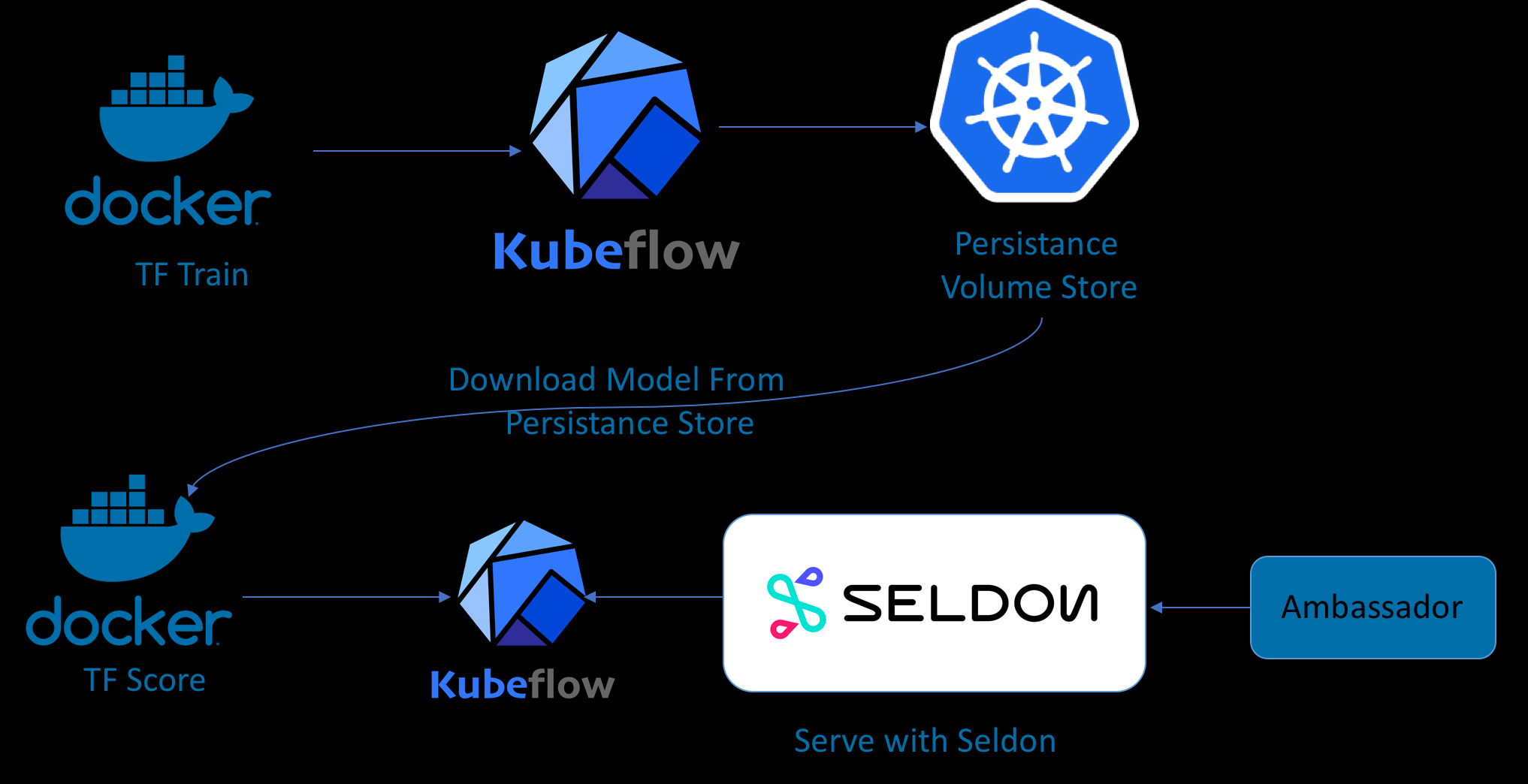 Kubernetes - Tensorflow
- Jsonnet
- Ksonnet
- Kubeflow
- Docker
- Seldon
- S2i
Kubernetes - Tensorflow
- Jsonnet
- Ksonnet
- Kubeflow
- Docker
- Seldon
- S2i

Kubeflow project
- Is dedicated to making deployments of machine learning (ML) workflows on Kubernetes
- Simple, portable and scalable
- Anywhere you are running Kubernetes, you should be able to run Kubeflow.
Ambassador
- Ambassador is an open source, Kubernetes-native microservices API gateway built on the Envoy Proxy.
- Ambassador is built from the ground up to support multiple, independent teams that need to rapidly publish, monitor, and update services for end users.
- Ambassador can also be used to handle the functions of a Kubernetes ingress controller and load balancer.

- Seldon a serving container to export trained models to Kubernetes.
- Kubeflow integrates with Seldon Core, the open source platform for deploying machine learning models on Kubernetes.

Ksonnet
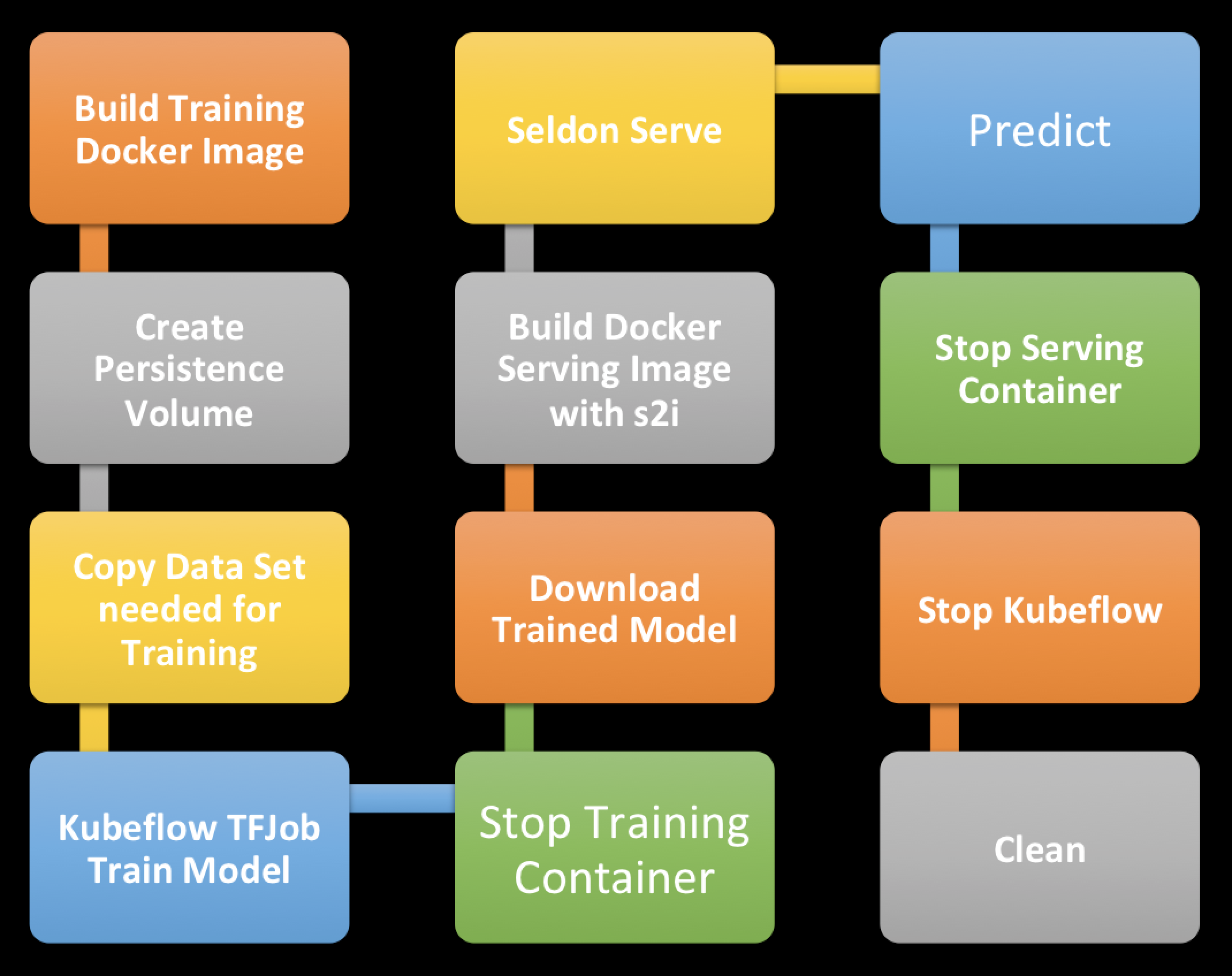
Deployment Steps
DEMO 1
Simple Iris Classification
Makefile
                    VERSION=1.1
                    TRAIN_IMAGE_BASE=alvinhenrick/kube-demo-simple
                    SERVE_IMAGE_BASE=alvinhenrick/iris-classification

                    build:
                        docker build -t ${TRAIN_IMAGE_BASE}:${VERSION} .

                    login:
                        docker login

                    push:
                        docker push ${TRAIN_IMAGE_BASE}:${VERSION}

                    createpvc:
                        kubectl apply -f mystorage.yaml

                    deletepvc:
                        kubectl delete -f mystorage.yaml

                    copydata:
                        kubectl cp ./iris dataaccess:/data/

                    train:
                        kubectl apply -f tfjobsimple.yaml

                    download:
                        kubectl cp dataaccess:/model/iris_model ./iris_model

                    s2i:
                        s2i build . seldonio/seldon-core-s2i-python3:0.1 ${SERVE_IMAGE_BASE}:${VERSION} --copy ./iris_model --env MODEL_NAME=IrisClassifier --env API_TYPE=REST --env SERVICE_TYPE=MODEL --env PERSISTENCE=0

                    s2ipush:
                        docker push ${SERVE_IMAGE_BASE}:${VERSION}

                    serve:
                        cd simple_demo_ks ; ks generate seldon-serve-simple iris-classification --image=${SERVE_IMAGE_BASE}:${VERSION}
                        cd simple_demo_ks ; ks apply default -c iris-classification

                    portforward:
                        kubectl port-forward `kubectl get pods -n default -l service=ambassador -o jsonpath='{.items[0].metadata.name}'` -n default 8080:80

                    predict:
                        curl -X POST -H 'Content-Type: application/json' -d '{"data":{"ndarray":[[5.9, 3.0, 4.2, 1.5],[6.9, 3.1, 5.4, 2.1],[5.1, 3.3, 1.7, 0.5]]}}' http://localhost:8080/seldon/iris-classification/api/v0.1/predictions

                    tail:
                        kubectl logs -f kube-demo-simple-master-0

                    tailseldon:
                        kubectl logs -f `kubectl get pods -l seldon-app=iris-classification -o=jsonpath='{.items[0].metadata.name}'` iris-classification

                    stop:
                        kubectl delete -f tfjobsimple.yaml

                    clean:
                        cd simple_demo_ks ; ks delete default -c iris-classification
                        cd simple_demo_ks ; ks component rm iris-classification
                        # ksonnet delete and remove component
Declare the variable,tag and version for training and serving docker image.
Docker build training image.
Login to your docker hub account.
Push the training docker image to docker hub.
Create/Delete Persistence volume container.
Copy training data into Persistence volume container.
Run the training job with Kubeflow.
Download the trained model.
Build model serving docker image with S2i.
Push the serving docker image to docker hub.
Serve the model with Kubeflow and Seldon.
Forward the port from the Ambassador container to localhost.
Make predictions via REST API and Seldon through the Ambassador proxy setup by Kubeflow.
Tail the training container log for debugging.
Tail the seldon serving container log for debugging.
Clean up training job.
Clean up seldon serving job.
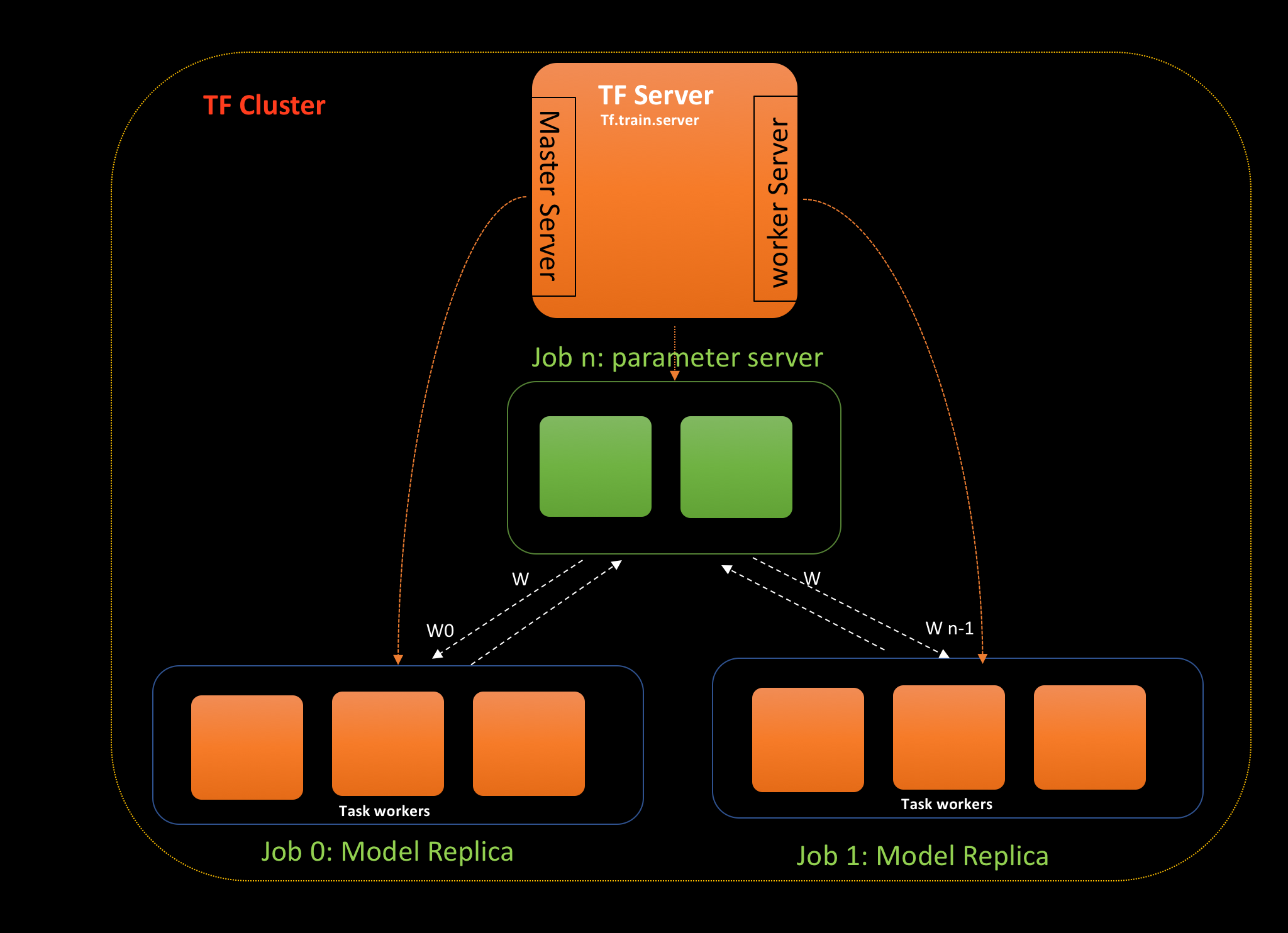
TF Cluster
TFJob
                ---
                apiVersion: "kubeflow.org/v1alpha2"
                kind: TFJob
                metadata:
                  name: kube-demo-dist
                spec:
                  tfReplicaSpecs:
                    Master:
                      replicas: 1
                      template:
                        spec:
                          containers:
                          - name: tensorflow
                            image: alvinhenrick/kube-demo-dist:1.1
                            command: ["python", "/code/train_and_eval.py","--output_path=/model/imdb_model"]
                            volumeMounts:
                            - name: data
                              mountPath: "/data"
                            - name: models
                              mountPath: "/model"
                          volumes:
                          - name: data
                            persistentVolumeClaim:
                              claimName: mydata
                          - name: models
                            persistentVolumeClaim:
                              claimName: mymodels
                    Worker:
                      replicas: 3
                      template:
                        spec:
                          containers:
                          - name: tensorflow
                            image: alvinhenrick/kube-demo-dist:1.1
                            command: ["python", "/code/train_and_eval.py","--output_path=/model/imdb_model"]
                            volumeMounts:
                            - name: data
                              mountPath: "/data"
                            - name: models
                              mountPath: "/model"
                          volumes:
                          - name: data
                            persistentVolumeClaim:
                              claimName: mydata
                          - name: models
                            persistentVolumeClaim:
                              claimName: mymodels
                    PS:
                      replicas: 2
                      template:
                        spec:
                          containers:
                          - name: tensorflow
                            image: alvinhenrick/kube-demo-dist:1.1
                            command: ["python", "/code/train_and_eval.py","--output_path=/model/imdb_model"]
                            volumeMounts:
                            - name: data
                              mountPath: "/data"
                            - name: models
                              mountPath: "/model"
                            ports:
                            - containerPort: 6006
                          volumes:
                          - name: data
                            persistentVolumeClaim:
                              claimName: mydata
                          - name: models
                            persistentVolumeClaim:
                              claimName: mymodels
TFJob is a Kubernetes custom resource definition that makes it easy to run TensorFlow training jobs.
The Master is responsible for orchestrating training and performing tasks like checkpointing the model.
Kubernetes training container specification
Kubernetes Persistent volume mounts
The Worker do the actual work of training the model. In some cases, worker 0 might also act as the Master.
The PS are parameter servers; these servers provide a distributed data store for the model parameters.
Seldon Core
Instead of just serving up single models behind an API endpoint, Seldon Core allows complex runtime inference graphs to be deployed in containers as microservices.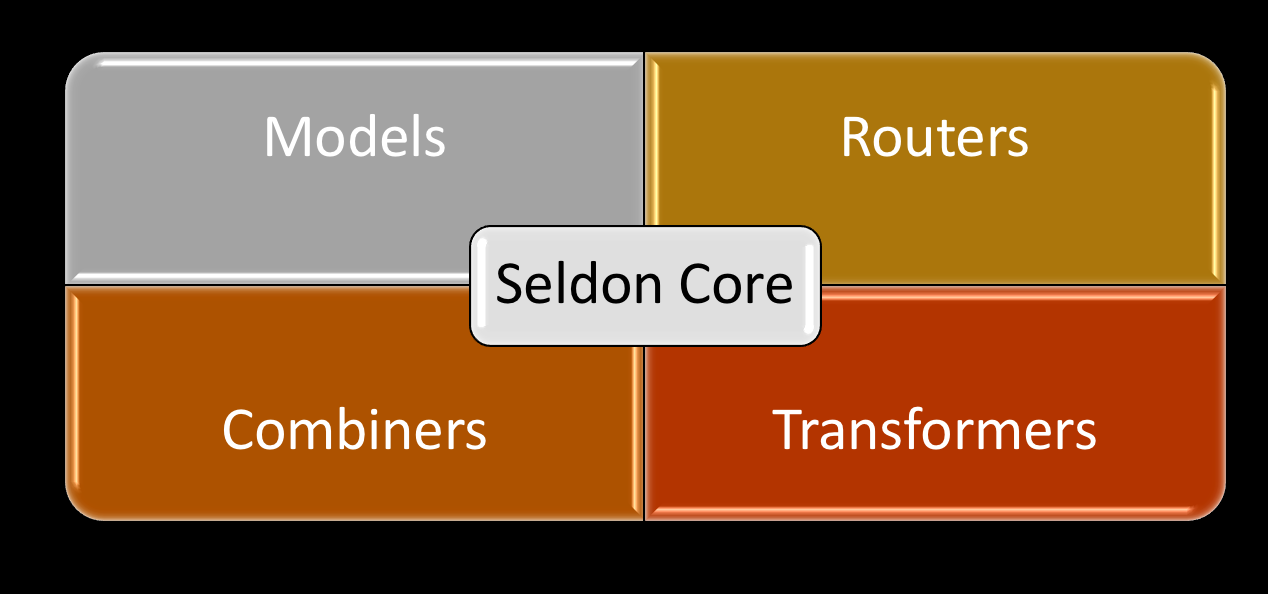
The example graphs
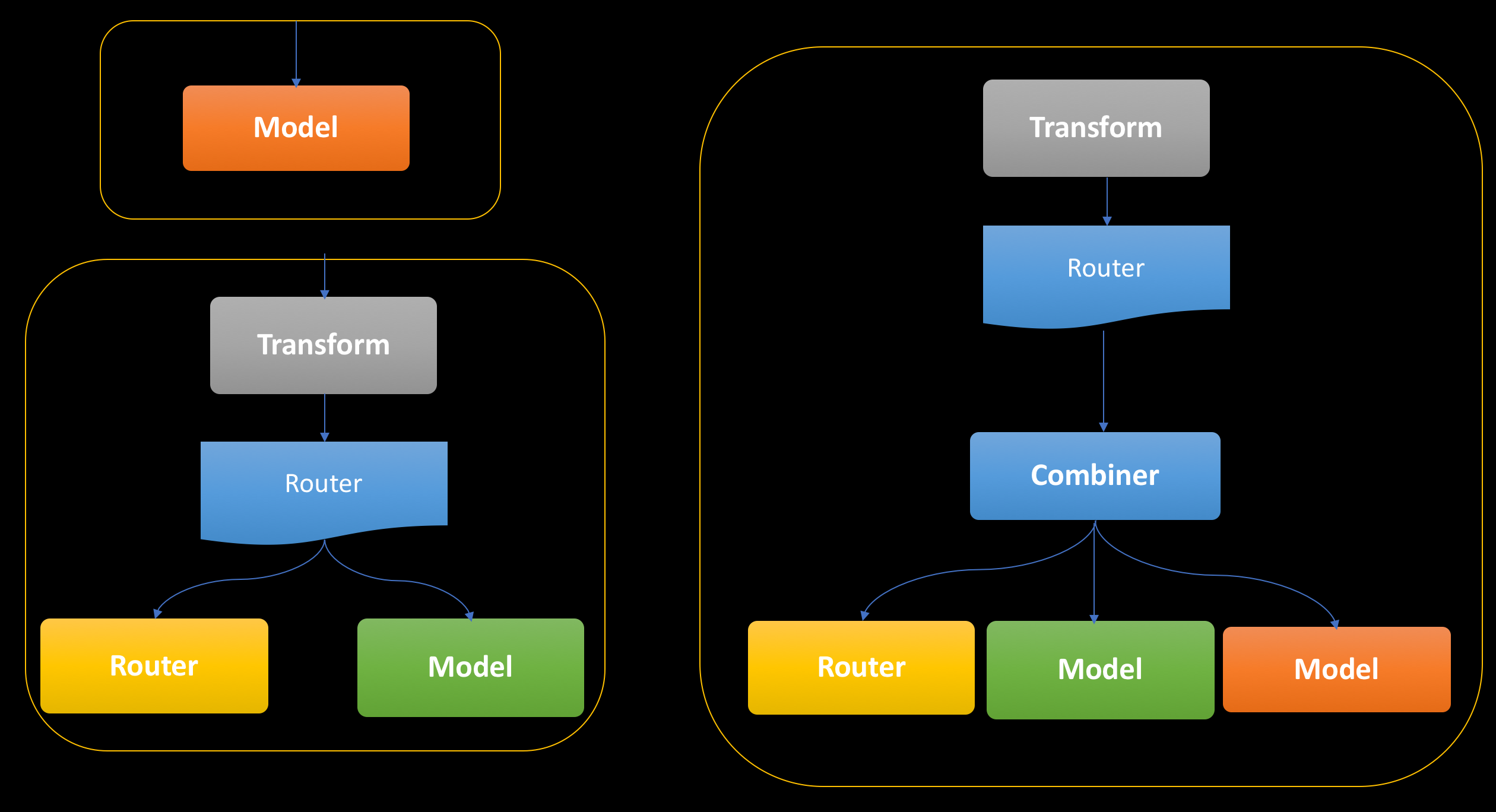
Advance Graphs
Seldon Deployment
                    {
                      "apiVersion": "machinelearning.seldon.io/v1alpha2",
                      "kind": "SeldonDeployment",
                      "metadata": {
                        "labels": {
                          "app": "seldon"
                        },
                        "name": "your-deployment-name"
                      },
                      "spec": {
                        "annotations": {
                          "project_name": "your project name",
                          "deployment_version": "your-deployment-version"
                        },
                        "name": "your-deployment-name",
                        "oauth_key": "oauth-key",
                        "oauth_secret": "oauth-secret",
                        "predictors": [
                          {
                            "componentSpecs": [
                              {
                                "spec": {
                                  "containers": [
                                    {
                                      "image": "your-docker-image",
                                      "imagePullPolicy": "IfNotPresent or Always etc",
                                      "name": "your-model-name",
                                      "resources": {
                                        "requests": {
                                          "memory": ""
                                        }
                                      }
                                    }
                                  ],
                                  "terminationGracePeriodSeconds": ""
                                }
                              }
                            ],
                            "graph": {
                              "children": [],
                              "name": "your-model-name",
                              "endpoint": {
                                "type": "your-endpoint-type #REST or #GRPC"
                              },
                              "type": "MODEL"
                            },
                            "name": "your-model-name",
                            "replicas": "# Number of replica",
                            "annotations": {
                              "predictor_version": "your-model-version"
                            }
                          }
                        ]
                      }
                    }
SeldonDeployment is a Kubernetes custom resource definition that makes it easy to server models.
Seldon serving container specification.
The deployment graph definition.
DEMO 2
Simple IMDB Document Classification
Thank you!!!!